
How to Use Cutlery Properly at Restaurant
Let’s just cut to the chase. We have all been there – invited to an elegant dinner party or a wedding where the table settings resemble a scene straight out of “Bridgerton.” Faced with a daunting array of forks, knives, and spoons, we wonder how on earth we could navigate this maze of fork and knife placement without looking like cavemen. Fear not, gentle readers, for the world of cutlery etiquette is not as formidable as it seems.
Understanding Cutlery Placement
While we have briefly discussed fine dining table etiquette, we will now delve deeper into how to navigate the fork and knife placement. With a dash of the knowledge we’re giving you, you’ll soon be able to handle any table setting like a regular invitee to Queen Charlotte’s dinner parties!
Starting with the Basics:
- Center Stage: The plate takes center stage, surrounded by knives, forks, and spoons as its supporting actors.
- Right Side: Spoons and knives are arranged in order of use from the outside in.
- Left Side: Forks await their turn.
- Above the Plate: Dessert forks and spoons lie above the plate, ready for their finale.
- Glasses: Glasses for water and wine sit above the knives, waiting for their turn to shine.
Navigating Specialized Cutlery in Fine Dining
Building on the foundational understanding of cutlery placement, let us explore the more intricate world of specialised utensils often found in sophisticated dining settings. Beyond the basic fork, knife, and spoon, fine dining frequently introduces a refined array of purpose-built implements. Understanding their function and proper use is a hallmark of a true connoisseur, ensuring you are prepared for any culinary presentation with confidence and grace.
1. The Oyster Fork: Small but Mighty
Often the smallest fork at the setting, the oyster fork is typically placed to the right of the soup spoon, or sometimes laid directly upon the plate. As its name suggests, it is designed for consuming oysters and other small shellfish. Hold it much as you would a pen, using it to gently dislodge the oyster from its shell. Reserve it for delicate work; it is not intended for piercing larger items.
2. The Fish Knife and Fork: A Delicate Duo
When a fish course is served, you will likely encounter a dedicated fish knife and fork. The fish knife has a distinctive paddle-like shape with a broad, dull blade, sometimes featuring a small notch. It is designed for separating delicate flesh from bone and skin rather than for cutting. The fish fork, in turn, has broader and flatter tines than a standard dinner fork, making it easier to flake and lift the fillet. Use the knife to gently guide the fish onto the fork, avoiding harsh cutting motions.
3. Dessert Cutlery: The Sweet Finale
As noted earlier, dessert forks and spoons are typically placed horizontally above the main plate. When dessert is served, the dessert fork is generally used for items such as cake or pie, while the dessert spoon is suited to softer dishes like mousse, ice cream, or fruit compotes. When both are present, the fork is held in the left hand and the spoon in the right for dishes that require both, such as a tart with a sauce. Should only one be needed, simply select the appropriate utensil for the task. Mastering these subtle distinctions reflects a refined appreciation for the dining ritual.
How to Dine with Grace
When it is time to dine, there’s a trick you need to note:
- Hold Your Fork and Knife Placement Correctly: Hold your fork in your left hand, tines down, and your knife in your right, blade down.
- Keep Elbows Relaxed: Keep your elbows relaxed and off the table, with your hands near your plate.
- Cutting Food: Apply pressure with the fork using your index finger and employ a gentle sawing motion with the knife.
- Fork Only: Only the fork makes the journey from plate to mouth—never bring the knife close to your mouth. We want a nice, pretty dinner, not a horror scene.
The Language of Fork and Knife Placement
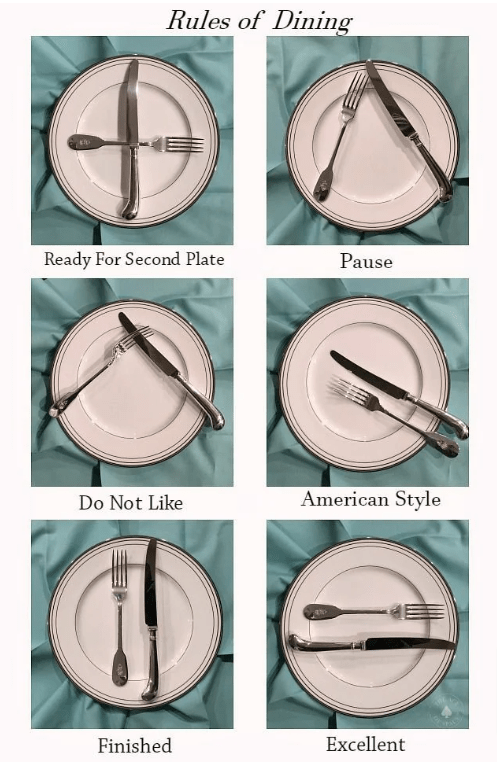
Remember that cutlery has its own language. It is subtle yet expressive. The best fine dining restaurants in Jakarta will have butlers who easily comprehend this language, and you can communicate with them effortlessly once you master these moves:
- Taking a Break: Place your fork and knife in the center of your plate, tips forming an inverted ‘V.’ This signals a pause, not a finish.
- Ready for the Next Course: Cross your fork and knife on the plate, with the fork facing up and the knife to the left.
- Showing Appreciation: Align your cutlery to the right. This courteous gesture indicates your enjoyment of the meal.
- Expressing Displeasure: Form a similar ‘V’ as when taking a break, but slip the knife’s tip between the fork’s teeth. A silent, polite critique.
- Finishing Up: Place your knife and fork vertically in the center of your plate. This clear signal allows the staff to whisk your plate away.
Truth is, dining is a blend of taste and social grace. Good table manners not only elevate your dining experience but also showcase your sophistication and respect for tradition. So why not practice at Lawry’s? Peruse our menus and try out these new tips you have learned!
Napkin Etiquette: Why It Matters
When you’re dining at a nice restaurant or attending a formal dinner, using a napkin the right way shows that you have good table manners. It may seem like a small thing, but how you use a napkin actually says a lot about your understanding of dining etiquette. It shows respect for the host, for others at the table, and for the overall experience.
Napkin helps keep you clean, neat, and polished while you eat. Whether you’re wiping your hands or dabbing your mouth, using a napkin correctly helps you stay presentable throughout the meal.
Here’s a step-by-step guide on how to use napkin with confidence:
1. When to Place the Napkin
As soon as you sit down and the food is about to be served, take your napkin and gently unfold it. Don’t shake it open like a towel—just unfold it neatly and place it on your lap. This signals that you’re ready to start the meal.
In fine dining, the napkin is almost always placed on your lap and should stay there throughout the meal.
2. How to Use the Napkin During the Meal
Use your napkin as needed—but gently. If you need to wipe your mouth, dab softly rather than wiping harshly. The idea is to keep your face clean and avoid smudges or crumbs while still being discreet.
Also, if your fingers get a little messy (especially during a multi-course meal), you can lightly use the napkin to clean them.
3. Leaving the Table Temporarily? Here’s What to Do
If you need to excuse yourself during the meal, don’t place the napkin back on the table. Instead, loosely fold it and place it on your chair. This tells the staff and others at the table that you plan to return.
4. After the Meal
When the meal is completely finished, that’s when you place the napkin back on the table. But don’t refold it neatly like it was before. Just place it loosely to the left of your plate. This signals that you’re done with your meal.
Avoid putting the napkin on your plate or pushing it in a messy pile. A simple, slightly folded position is the most polite and refined way to end your meal.
5. Bonus Tips for Napkin Etiquette
- Don’t use it like a tissue. Avoid blowing your nose into a napkin at the table since it’s considered very impolite.
- Don’t tuck it into your collar. Unless you’re eating lobster or messy food and you’re at a very casual setting, never tuck your napkin into your shirt.
- Follow the host. At formal dinners, wait until the host places their napkin on their lap before doing the same.
FAQ
Always work your way from the outside in. The cutlery furthest from your plate is used for the first course.
It signals that you’re taking a break and not yet finished with your meal.
Hold the fork in your left hand, tines down, and the knife in your right, blade down, using a gentle sawing motion to cut food.
Reserve Table
Lawry’s Restaurants is the perfect place to begin your venue search for any occasion.