
What Defines a “Perfect” Prime Rib? Here’s What Our Chef Says
Prime rib is a dish that tells the truth fast. A cut this large gives a kitchen very little room to bluff. The beef has to be chosen properly, the roast has to be timed well, the resting has to be right, and the service has to land without losing momentum.
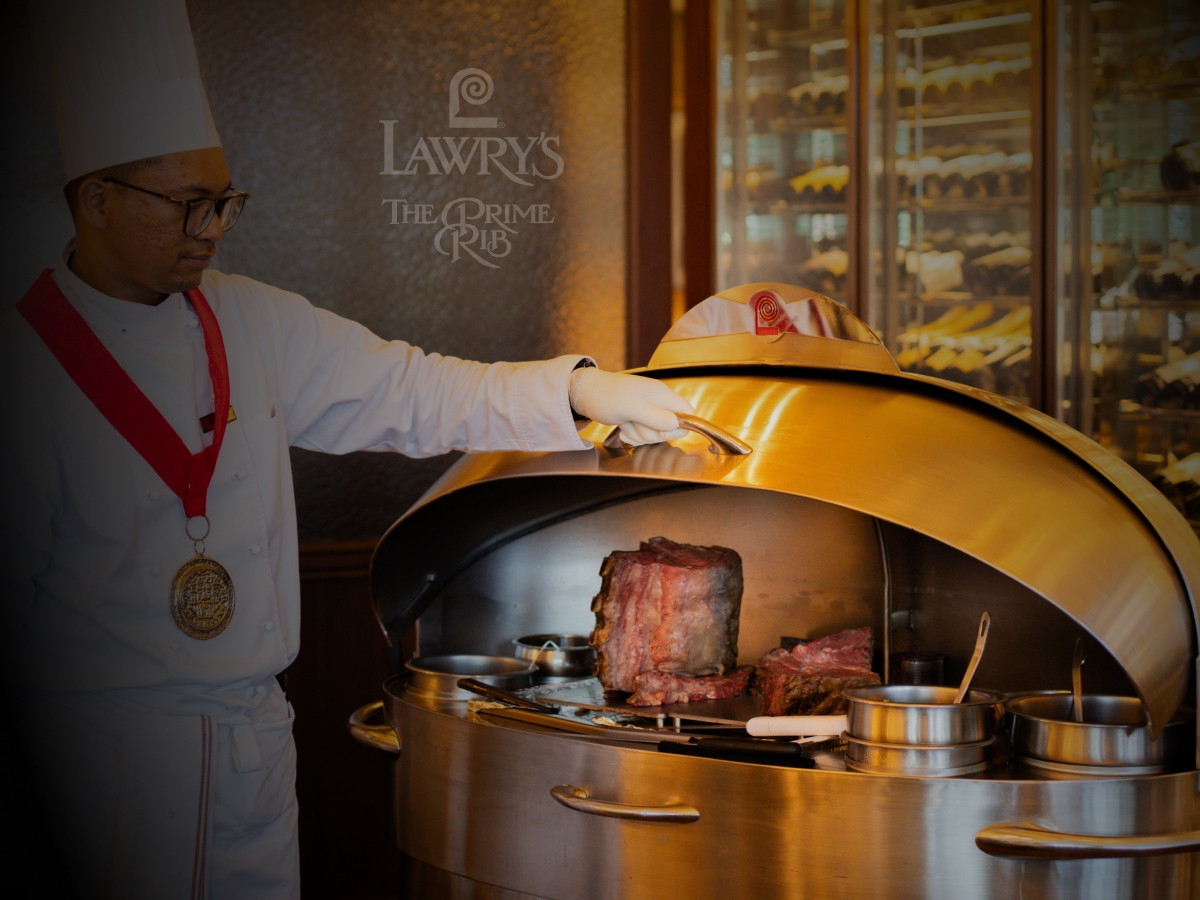
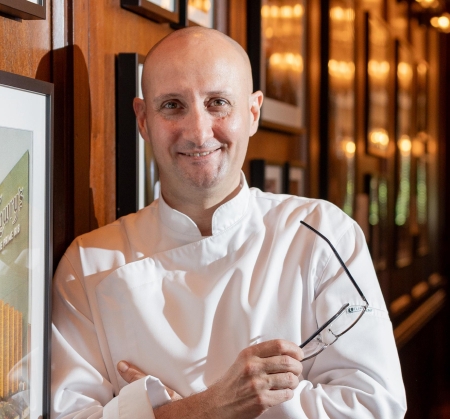
At Lawry’s The Prime Rib Jakarta, Executive Chef Camille runs that process with a steady hand and no unnecessary fuss. Slow heat, careful carving, natural jus, and a service rhythm that gets the plate out before the appetite turns impatient. And none of that begins in the dining room. It starts with the cut itself and every decision that gives prime rib its shape long before the first slice reaches the table.
The Meat
A strong prime rib begins before it reaches the oven. The quality of the beef, the cut, and the fat distribution all shape the final texture.
Prime rib comes from the rib section of the cow, an area that does not work as hard as the shoulder or leg. Because the muscle does less heavy movement, the meat is naturally tender. This is why prime rib has a softer bite compared with more active cuts that need longer cooking to break down tougher connective tissue.
The grade of the beef also matters. High-quality choices such as USDA Prime and Certified Angus Beef are valued because they offer consistent structure, flavor, and marbling. Marbling refers to the fine streaks of fat running through the meat. When prime rib cooks, that fat slowly melts into the muscle fibers. The result is a richer mouthfeel, better moisture, and that buttery texture people expect from a well-prepared rib roast.
Good marbling also supports flavor. Fat carries aroma and helps the beef taste fuller without relying too heavily on seasoning. A prime rib should still taste clearly of beef, with enough richness to make each slice feel complete.
The Preparation
Prime rib rewards patience. Chef Camille explains that Lawry’s prime rib requires at least five hours of slow cooking. This method is not only about tenderness. It also creates a natural gradient of doneness within one large roast.
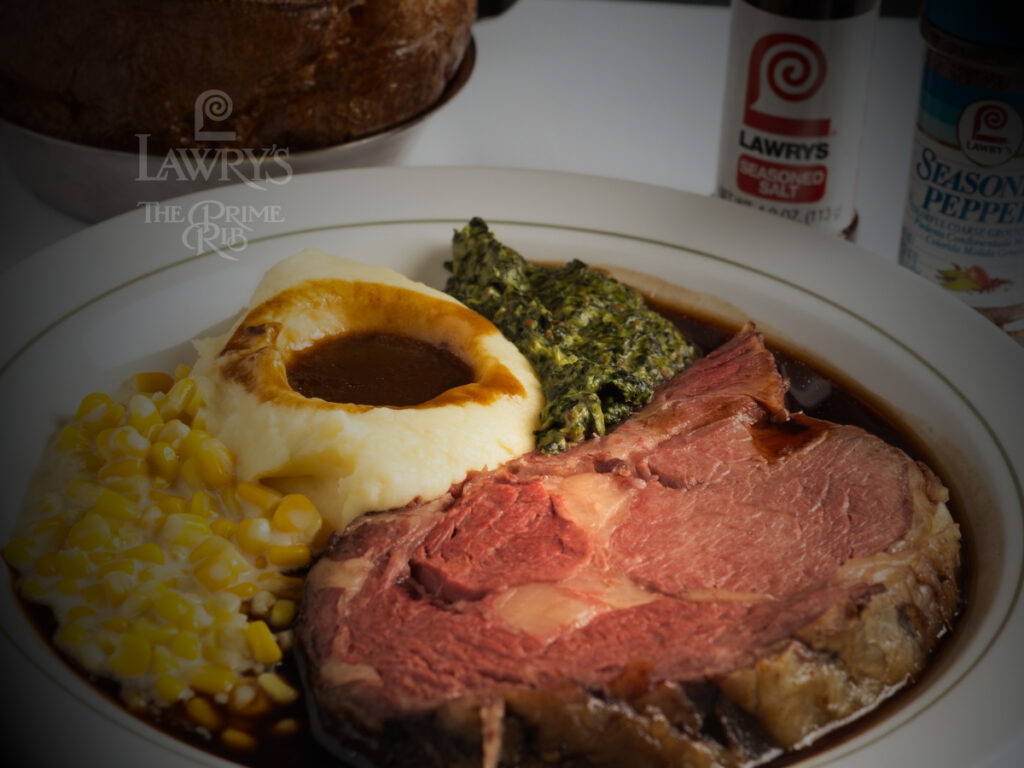
The outer portion of the meat will move toward well done or medium well because it receives the most heat. As the roast is sliced closer to the center, the meat becomes pinker, softer, and increasingly rare. This range allows guests to enjoy different levels of doneness from the same roast, while keeping the character of the prime rib intact.
Slow roasting also helps the kitchen control the internal temperature. Instead of shocking the meat with aggressive heat, the roast cooks gradually. The fibers tighten more gently, the fat has time to render, and the juices stay better distributed. For a cut as large as prime rib, this control is essential.
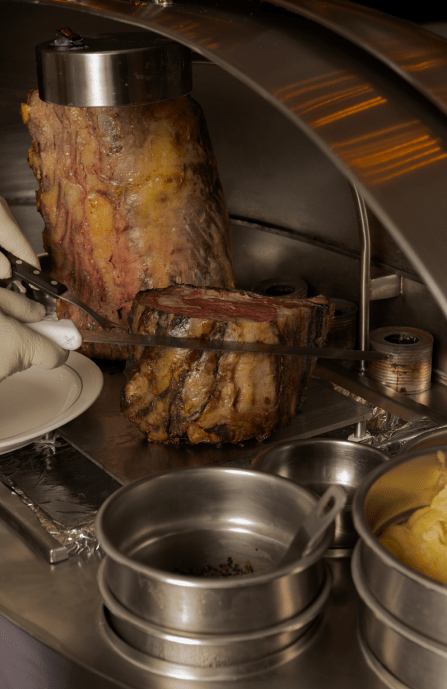
Resting is another key step. Once the roast comes out of the oven, it needs time before carving. During cooking, the juices move through the meat. If the roast is sliced too quickly, those juices run out onto the board instead of staying in the slice. Resting allows the meat to settle, making each cut juicier and more tender.
Chef Camille also sometimes roasts the prime rib bones and pours au jus over them. This adds depth to the serving experience, using the bones and natural juices to reinforce the beef’s own flavor rather than covering it up.
The Service
Prime rib is not only about what happens in the oven. It also depends on how the kitchen moves.
At Lawry’s, Chef Camille designed the kitchen with a long-pass system. This setup helps the team manage a rush of guests within one shift without creating chaos behind the scenes. The goal is simple: keep the dining room flowing, keep the carving precise, and make sure guests do not wait too long for their dish to arrive. A slice should arrive warm, properly rested, and ready to eat. The kitchen system supports the food, and the food supports the experience.
For diners looking for fine dining Jakarta, Lawry’s brings classic prime rib, steaks, drinks, and tableside service into one polished dining experience. Explore Lawry’s menu to see the signature cuts, pairings, and accompaniments, or book your seat for a prime rib experience like no other!
FAQ
Prime rib comes from the rib section of the cow, a part that does very little heavy movement. That lower workload means less connective tissue and a naturally tender bite. Combined with rich marbling, prime rib delivers a softer, juicier texture that more active cuts like shoulder or brisket simply cannot replicate without long, slow cooking.
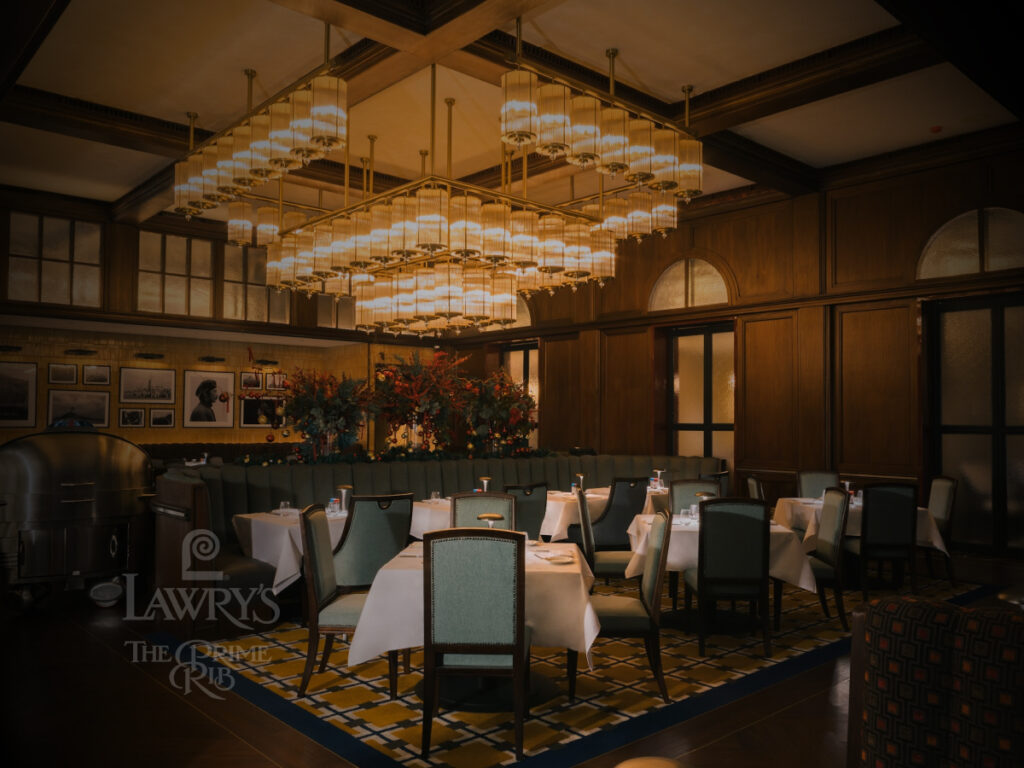
Lawry's The Prime Rib Jakarta offers a classic prime rib experience built around slow roasting, precise carving, and tableside service. Executive Chef Camille oversees the kitchen process from the cut through to the plate, making it one of the more considered prime rib destinations in the city for anyone looking for fine dining in Jakarta.
Reserve Table
Lawry’s Restaurants is the perfect place to begin your venue search for any occasion.