
What’s the Real Difference Between Porterhouse and T-Bone Steak
At first glance, porterhouse and T-bone steaks look almost identical. Both arrive at the table as dramatic, on-the-bone cuts with a signature T-shaped bone in the middle and two distinct sections of meat on either side. Both promise deep beef flavor, plenty of char, and that indulgent steakhouse energy you want from a serious cut. But they’re not the same steak, and if you care about texture, portion size, presentation, and how you like to cook, the difference matters.
Let’s start with the basics. Both the porterhouse and the T-bone come from the short loin of the cow, which is known for producing some of the most tender and luxurious beef. Each cut is essentially two steaks in one: on one side of the bone you get the New York strip, which is bold, juicy, and full of classic steakhouse character, and on the other side you get the tenderloin, also known as filet mignon, which is prized for its velvety softness and lean profile. You get flavor and tenderness at the same time, which is why both these cuts are considered steakhouse royalty and often shared at the table.
So what is a porterhouse steak?
A porterhouse is cut from the rear section of the short loin, where the tenderloin muscle is at its thickest. By definition, the tenderloin side of a porterhouse must be generous. In fact, United States Department of Agriculture guidelines state that to qualify as a porterhouse, the filet portion must measure at least 1.25 inches across at its widest point.
That means a porterhouse is usually massive, often 24 ounces or more, and it is commonly served as a showpiece cut for two. On the plate, it looks like abundance. You get a full, steakhouse-size strip plus a substantial filet, divided by bone, beautifully marbled, ready to carve tableside.
What is a T-bone steak?
A T-bone is also cut from the short loin, but from the slightly more forward section, where the tenderloin narrows. It still features that same T-shaped bone, with strip steak on one side and tenderloin on the other, but the filet portion is smaller. If the tenderloin side measures less than 1.25 inches, it’s a T-bone, not a porterhouse. Some T-bones can be fairly thick and satisfying for one very hungry diner or for two lighter eaters to split, but in most cases a T-bone is more of an individual cut, around 18 ounces, not a feast-for-two statement piece.
In other words, every porterhouse is technically a T-bone, but not every T-bone is a porterhouse. The size of the filet is the dividing line. That size difference affects price as well. Porterhouse steaks tend to cost more because you’re essentially getting a full-size strip steak plus a generous filet mignon in one cut, and filet is one of the most expensive sections of the animal. T-bones, with their smaller filet, are generally a little more approachable in price.
Now let’s talk cooking.
Both steaks respond beautifully to high heat. The classic approach is grilling over intense direct heat to build a deep sear and that golden-brown crust while keeping the inside juicy. This style also plays up the bone, which acts like a flavor anchor and helps insulate the meat. Because porterhouse steaks are usually thicker, they can handle a longer cook and still stay pink and tender in the middle. They are ideal for a two-zone grill method: sear hard over high heat, then finish over lower heat so the interior gently rises to medium rare without burning the exterior. You can also use a cast-iron skillet followed by an oven finish, basting with butter, garlic, and herbs for richness.
T-bone steaks can be cooked the same way, but thickness matters. A thinner T-bone leaves you less margin for error. You have less time to build crust before the interior races past medium rare. That means you need high heat, attention, and a thermometer. Pan sear in a ripping-hot skillet with oil that can handle serious heat, get that crust fast, then slide it into a hot oven for just a few minutes if needed. Resting the steak after cooking is non-negotiable for either cut. Letting the meat sit allows the juices to settle back into the fibers instead of spilling onto the board.
So which one should you choose, porterhouse or T-bone?
Well, it depends on what you want from the experience. If you’re celebrating, sharing, and you want drama, choose the porterhouse. It’s generous, it photographs beautifully, and it delivers both texture profiles in full: the tenderness of filet and the bold chew of strip. If you’re ordering for yourself and you love that strip steak flavor but still want a taste of filet without committing to a giant cut, the T-bone is the smart move. You still get variety and that classic on-the-bone presentation, just in a slightly leaner format.
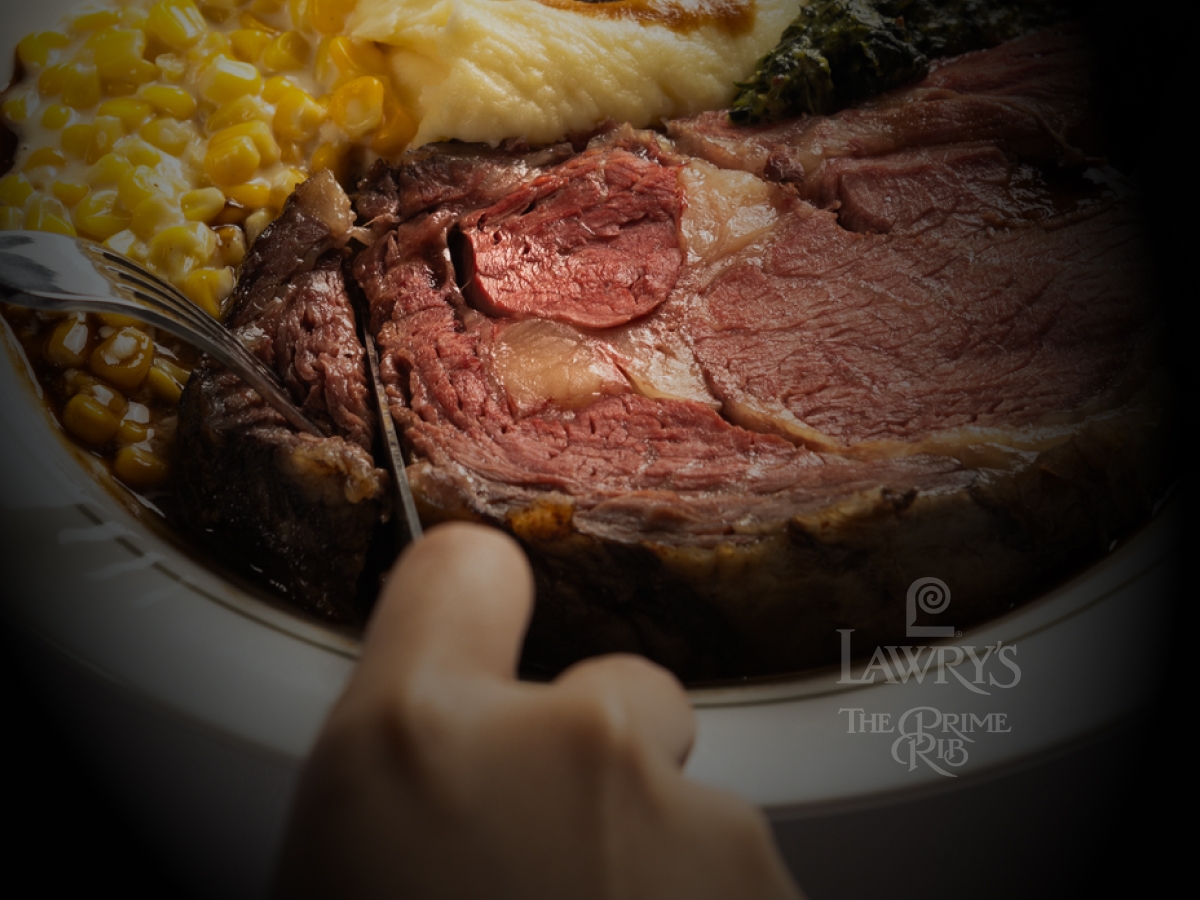
Of course, you can skip the guessing and let professionals handle it. At Lawry’s The Prime Rib Jakarta, a destination for fine dining Jakarta built on tradition and indulgence, both porterhouse-style and bone-in cuts are treated with the respect they deserve. The cooking is deliberate, the carving is precise, and the plating is built for celebration.
Explore Lawry’s menu, choose the cut that suits your mood, and let it arrive to the table with all the right accompaniments. For an evening built around steak, candlelight, and that tailored sense of occasion, book your seat and enjoy porterhouse or T-bone in a setting that feels luxurious from the first pour to the last bite.
FAQ
A porterhouse steak is cut from the rear section of the short loin where the tenderloin muscle is thickest, with the filet portion measuring at least 1.25 inches across at its widest point, making it larger and often suitable for sharing. In contrast, a T-bone is cut from a slightly more forward section where the tenderloin narrows, resulting in a smaller filet portion typically suitable for individual servings.
Porterhouse steaks are typically more expensive because they contain a full-size strip steak and a generous portion of filet mignon, which is one of the most expensive sections of the animal. T-bones have a smaller filet and are generally more approachable in price.
Both steaks respond well to high heat. For porterhouse, which is thicker, the ideal method is a two-zone grill: sear over high heat, then finish over lower heat. A T-bone, being thinner, requires quick high-heat searing and close attention to avoid overcooking. Both benefit from resting after cooking to allow juices to settle.
Choosing a porterhouse steak is ideal for celebrations and sharing due to its impressive size and the combination of tender filet and bold strip textures. It offers a dramatic presentation and a variety of flavors and textures on one plate.
Lawry’s The Prime Rib Jakarta offers a luxurious dining experience where both porterhouse and T-bone cuts are treated with respect and precision. The atmosphere is built for celebration, with deliberate cooking, precise carving, and exquisite plating that enhances the enjoyment of steak, complemented by a tailored sense of occasion.

Reserve Table
Lawry’s Restaurants is the perfect place to begin your venue search for any occasion.