
Thermal Precision: The Secret of Lawry’s Silver Cart Ritual
There is a moment at Lawry’s that every first-time guest remembers. The dining room hums with quiet conversation, then a gleaming silver cart rolls to the table, its polished dome catching the light. The lid lifts, steam curls upward, and the scent of slow-roasted prime rib fills the air. A certified carver stands ready, knife in hand, waiting for your order. It is theatre and craftsmanship in one — and it has been happening this way since 1938.
Behind that moment is a system built with extraordinary attention to detail. The Silver Cart is not simply a serving trolley. It is a precision instrument, engineered to maintain the perfect temperature, preserve the integrity of the beef, and deliver a consistently exceptional experience from the kitchen to the very last inch of your plate.
Read on to discover the craftsmanship, history, and precision behind one of the most iconic tableside rituals in fine dining.
Quick Summary:
- The Silver Cart was first introduced in 1938 by co-founder Lawrence L. Frank as a solution to serve prime rib at peak temperature and freshness, directly from roast to plate.
- Each handcrafted cart weighs between 270–450 kilograms and features an internal steam tank system that maintains heat at around 190°C throughout service.
- The beef is USDA Prime, corn-fed, wet-aged, and slow-roasted whole for approximately five hours before being carved tableside by a certified carver.
- Guests choose their preferred cut — Jakarta Cut, English Cut, Lawry Cut, or Diamond Jim Brady Cut — sliced to thickness with precision, right at the table.
- Classic accompaniments including creamed spinach, mashed potatoes, creamed corn, and Yorkshire pudding are held at temperature in the cart’s heated compartments.
- The Silver Cart ritual has remained consistent for over eight decades, with carvers completing intensive training before earning certification.
Understanding the Lawry’s Silver Cart
At Lawry’s, table service is engineered around one defining element: the Silver Cart. First introduced in 1938 by co-founder Lawrence L. Frank, the cart was designed to solve a simple problem—how to serve prime rib at peak temperature and freshness directly from roast to plate. That solution became a signature ritual that still anchors the dining experience today.
The Silver Cart was never an afterthought. Frank invested heavily in its construction, commissioning an art deco stainless steel design that would function as both serving hardware and stage. The original carts reportedly cost nearly as much as a Cadillac at the time. Today, each handcrafted unit weighs between 270–450 kilograms, built to withstand heat retention and daily use. Its polished metal body and curved lid give it a distinctive presence as it rolls across the dining room.
Masterful Thermal Engineering
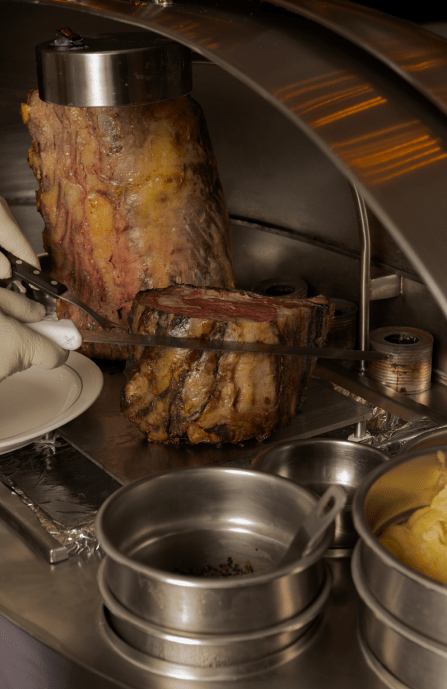
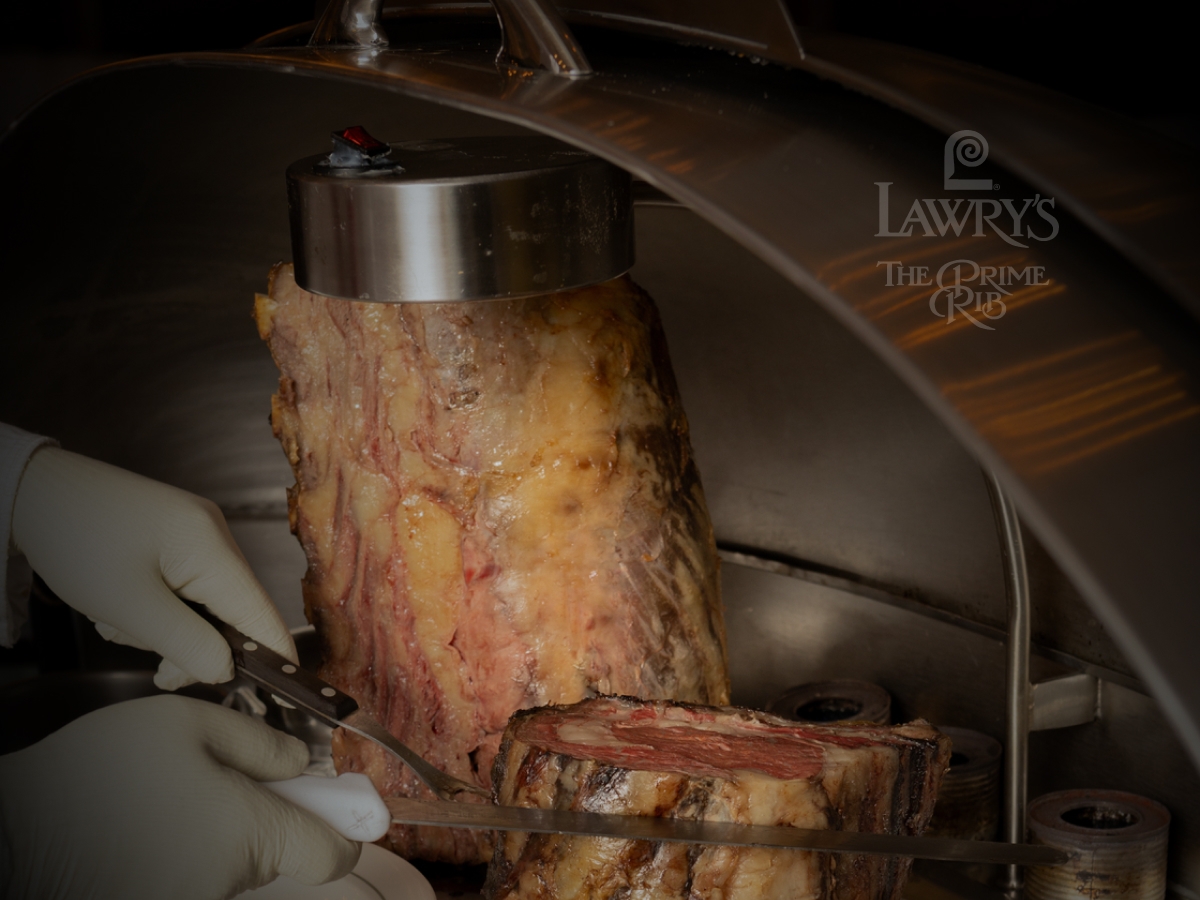
What makes the hardware remarkable is its thermal engineering. Inside the cart is a steam tank system that maintains high internal heat around 190°C to keep the USDA Prime Beef warm after being slow-roasted for approximately five hours. The beef itself is corn-fed, wet-aged, and roasted whole to preserve moisture. Rather than slicing it in the kitchen, the roast remains intact inside the cart until it reaches the guest’s table.
The Art of Tableside Carving
That moment defines the ritual. The lid lifts, steam rises, and a certified carver steps forward with carving knife and fork. This is where food serving becomes performance. Guests select their preferred cut, whether it be the Jakarta Cut, English Cut, Lawry Cut, or the larger Diamond Jim Brady Cut. The chef portions by sight, slicing to thickness with precision, making it the most photographed, most Instagrammable point of the meal, and it happens inches from the diner.
Complete with Classic Accompaniments
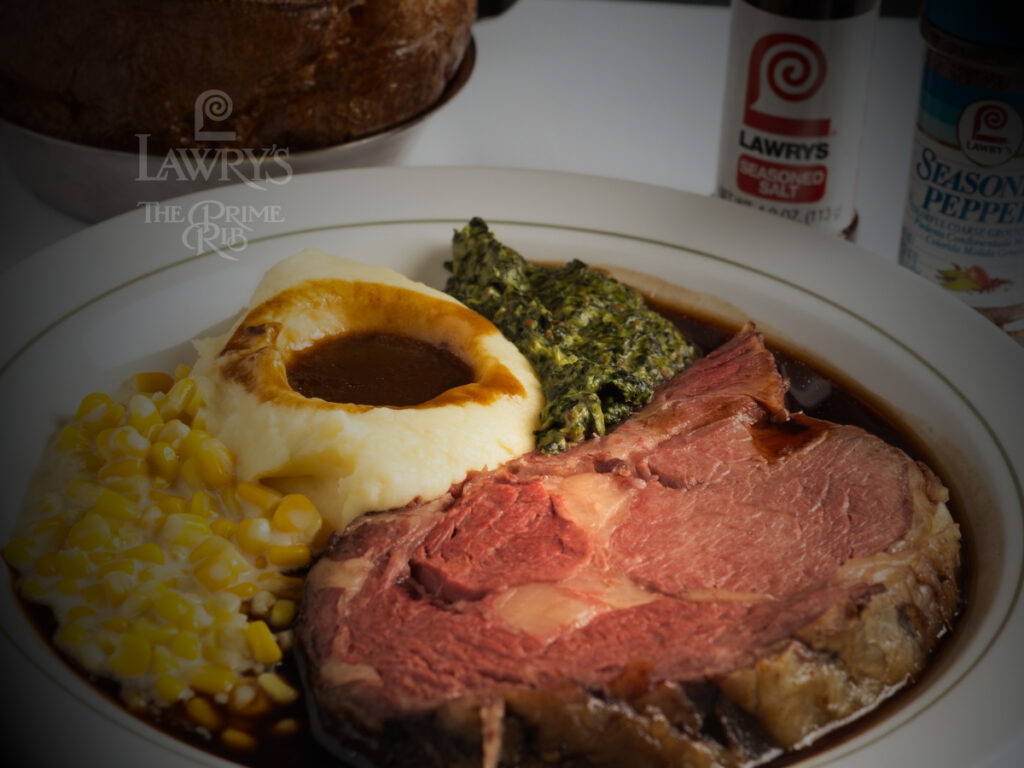
The cart carries more than beef. Arranged in heated compartments are classic accompaniments: creamed spinach, mashed potatoes, creamed corn, and Yorkshire pudding. Each component is held at temperature to ensure consistency from first plate to last. The Yorkshire pudding, airy and golden, adds structure to the plate. The creamed spinach delivers richness. The mashed potatoes provide balance. Gravy and au jus are ladled directly after carving, allowing guests to choose their preferred sauce intensity.
Below the main chamber, plate warmers ensure that dishes remain hot when the prime rib is served. This detail matters. A warm plate prevents temperature loss and maintains the integrity of the slow-roasted beef. It reflects the philosophy behind the Silver Cart, if you control the environment, you control the result.
A Legacy of Precision
The ritual does not rely on theatrics alone. It is grounded in repeatable technique. Prime ribs are roasted whole for at least four hours, often closer to five, allowing gradual heat penetration. The steam tank stabilizes temperature during service. Carvers complete intensive training before earning certification.
This approach has remained consistent for over eight decades. The design used today closely mirrors the original concept from Beverly Hills. That continuity reinforces the brand’s identity. It also explains why the Silver Cart remains central to the Lawry’s experience.
For those who want to see this ritual firsthand, explore Lawry’s The Prime Rib Jakarta or browse the selections on Lawry’s menu to understand the range of prime rib cuts available. When you’re ready to witness the carving in action, reserve your table and experience the Silver Cart ritual at Lawry’s Jakarta.
FAQ
The Silver Cart is a custom-built stainless steel carving cart introduced in 1938 to serve prime rib tableside at optimal temperature and freshness.
Yes, the Silver Cart ritual remains a signature element across Lawry’s restaurants worldwide.
Tableside carving is the practice of slicing and serving meat directly at the guest’s table for optimal freshness and customization.
Maintaining heat preserves juiciness, texture, and flavor from the first slice to the last.
Reserve Table
Lawry’s Restaurants is the perfect place to begin your venue search for any occasion.