
Center Cut Filet Mignon: Is It Really Better?
A center cut filet mignon comes from the middle, most uniform section of the beef tenderloin. It is still filet mignon, just taken from the part that produces the thick, round steaks most people picture when they hear the name. Its appeal comes mainly from shape and consistency rather than a completely different flavor. If tenderness is your priority, the entire tenderloin already delivers it. The center cut simply makes that tenderness easier to cook evenly.
What Part of the Cow Is Filet Mignon?
Filet mignon is cut from the tenderloin, or psoas major, a long muscle that runs alongside the backbone. Because this muscle carries very little weight and does relatively little work, it develops less connective tissue than harder-working areas such as the shoulder or round. The result is the fine-grained, soft texture associated with filet mignon.
The tenderloin can be divided into three broad sections.
The head, sometimes called the butt end, is the widest section. It remains tender, although its irregular shape can make individual steaks less uniform.
The center, or barrel, has a consistent cylindrical shape. This is where center cut filet mignon comes from.
The tail tapers toward a narrow point. Its smaller pieces are often used for medallions, steak tips, tartare, stroganoff, or other dishes where a thick individual steak is unnecessary.
Is Center Cut the Same as Filet Mignon?
Technically, every center cut filet is filet mignon, while not every filet mignon is necessarily a center cut. Filet mignon is commonly used today as a general name for steaks cut from the tenderloin. “Center cut” gives you additional information about where along that tenderloin the steak was taken.
The center is especially popular in restaurants because its even width makes cooking more predictable. A thick steak with roughly the same diameter from top to bottom receives heat more evenly, giving the cook better control over the contrast between the seared exterior and the pink center.
That consistency also explains why center cuts often command a higher price. Only part of each tenderloin has the neat barrel shape required to produce them.
Is Center Cut Filet Mignon Actually Better?
For tenderness alone, the difference is fairly small. The head, center, and tail all come from the same exceptionally tender muscle. The center cut earns its reputation through uniformity.
Its shape makes it particularly useful when serving individual steaks. A thick center cut can develop a good crust while preserving a rare or medium-rare interior, without the thinner edges that can cook faster on an irregular piece.
Flavor depends heavily on the beef itself. Tenderloin is naturally leaner and more delicate in flavor than heavily marbled cuts such as ribeye. Beef grade and marbling can therefore make a noticeable difference within filet mignon itself.
What Other Tenderloin Cuts Should You Know?
Filet mignon is only one way the tenderloin appears on a menu. Chateaubriand usually refers to a larger portion taken from the thick center of the tenderloin and prepared for sharing. Instead of being portioned into individual steaks beforehand, it can be roasted or cooked whole and sliced for two or more diners.
Tournedos are smaller, round steaks cut from the tenderloin and traditionally served as individual portions. Depending on the butcher or restaurant, terminology can vary slightly, which is why the name alone does not always tell you exactly where along the tenderloin the steak was cut.
Trying Filet Mignon at Lawry’s The Prime Rib Jakarta
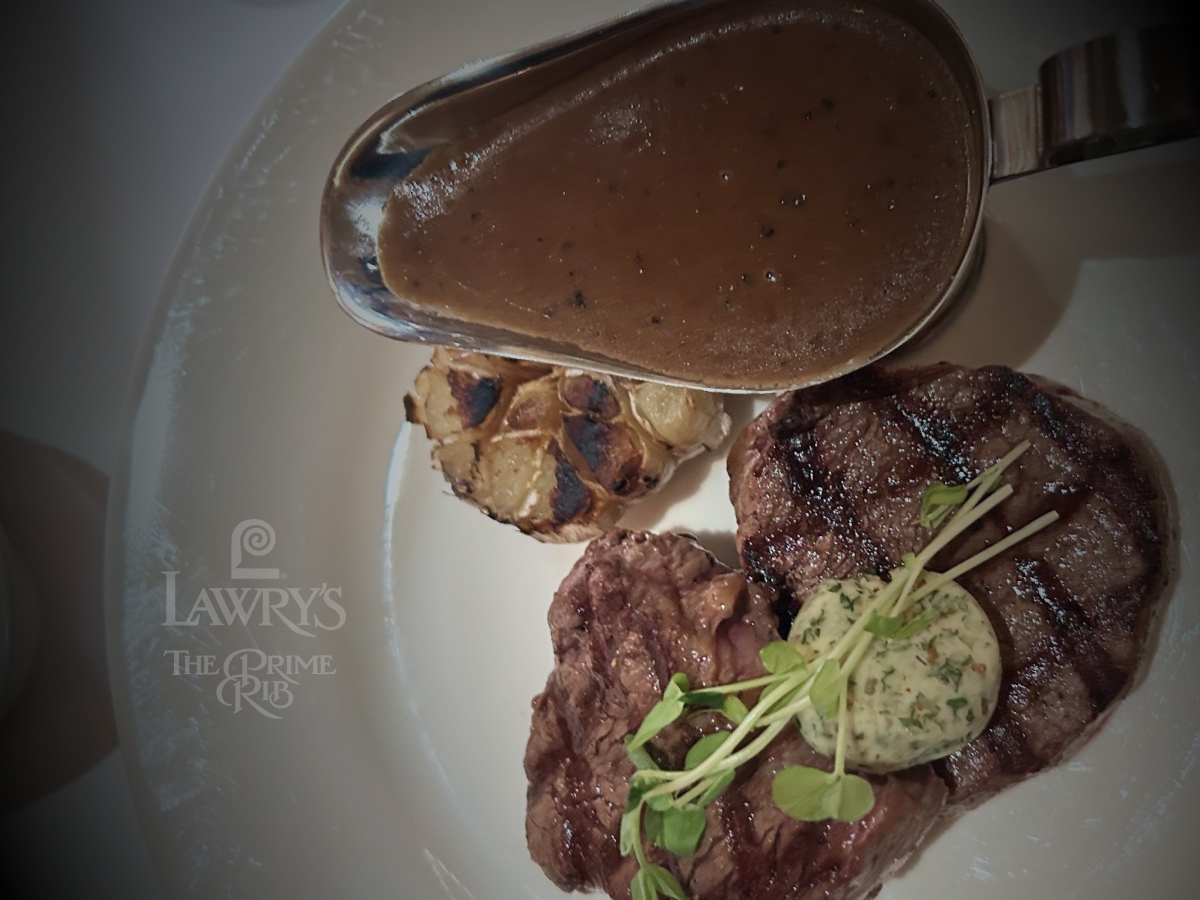
For diners exploring fine dining Jakarta, the current Lawry’s menu offers Wagyu MB5 Filet Mignon as a 220g portion served with garlic confit. Wagyu marbling gives the naturally lean tenderloin additional richness while retaining the soft texture that makes filet mignon distinctive.
It is a useful reminder that choosing filet is not simply a question of center versus end cut. Breed, marbling, portion size, preparation, and doneness all influence what eventually reaches the plate.
If filet mignon is the cut you usually scan for first on a steakhouse menu, book your seat and try Lawry’s Wagyu MB5 Filet Mignon for yourself.
Reserve Table
Lawry’s Restaurants is the perfect place to begin your venue search for any occasion.